
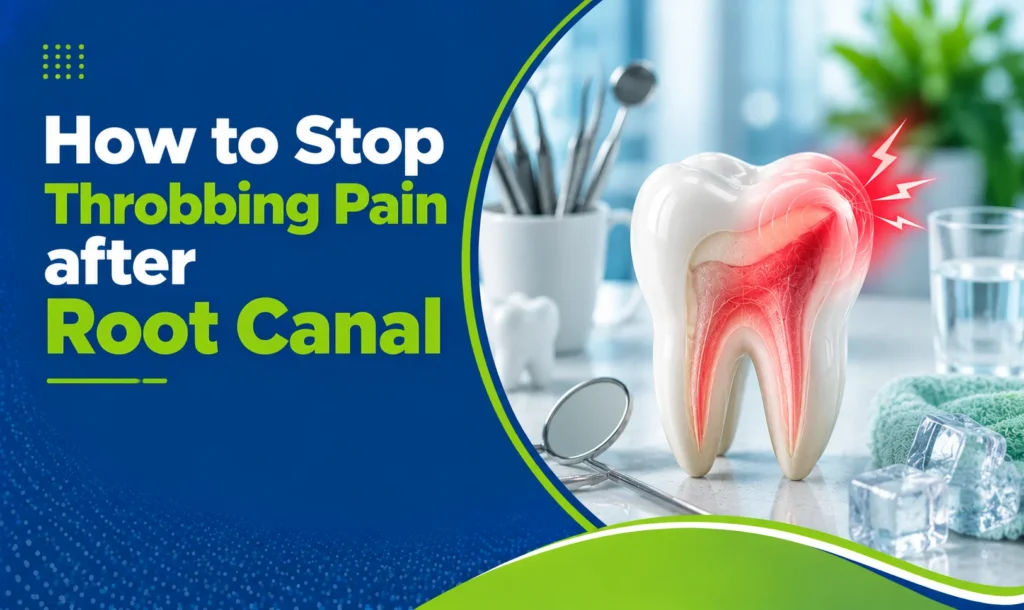
If you’re reading this at 2 AM with your jaw throbbing after a root canal — first, you’re not alone. Second, this discomfort is usually normal and there are things you can do RIGHT NOW to feel better.
Here’s the honest truth about post-root-canal pain: a small amount of throbbing for a day or two is expected. Your tooth just went through a lot, and your body is doing its job to heal. But that doesn’t mean you have to just tough it out.
In this article, Dr. Aliya Khan — a Columbia University-trained dentist at Moorestown Smile Center in NJ — walks you through exactly what to do at home to stop the throbbing, when it’s time to call your dentist, and how to speed up your recovery.
Let’s start with why it hurts in the first place.
What Causes Throbbing After Root Canal?
Why Your Tooth Throbs After a Root Canal
Here’s what’s happening inside your mouth right now. During a root canal Dr. Khan cleaned out the infected pulp inside your tooth and
sealed it. Now your body is doing the healing part — and healing means blood flow.
That extra blood rushing to the area? That’s the throbbing you’re feeling. Three things are happening at once:
1.Inflammation — your body is fighting off any last bits of bacteria. Totally normal.
2. Pressure build-up— fluids are collecting around the treated root, which creates that pounding sensation.
3. Active healing— new cells are growing to repair the inside of your tooth. Yes, teeth actually heal.
The throbbing usually calms down within 24-72 hours. But if it lasts longer or gets worse — that’s when you need to call us.
Quick Tips to Stop Dental Throbbing Pain After a Root Canal
5 Things You Can Do RIGHT NOW to Stop the Throbbing
1. Cold Compress (Do This First)
Grab a bag of frozen peas, a cold pack, or even a bag of frozen corn — anything cold and pliable. Hold it against your cheek near the treated tooth for 15 minutes, then take a 15-minute break.
Repeat as needed.
Why it works:
Cold reduces swelling and numbs the nerves in
the area. This is the single fastest way to knock down throbbing
pain.
2. Prop Your Head Up When You Lie Down
Use an extra pillow (or two) to keep your head elevated. When you’re flat on your back, blood pools in your head — including around your treated tooth. Keeping your head up means less blood pressure in the area and less throbbing.
Pro tip: this is why the pain often feels worse at night.
3. Warm Salt Water Rinse
Mix half a teaspoon of salt into a glass of warm (not hot) water. Swish it gently around your mouth for about 20 seconds, then spit it out. Do this 2-3 times a day.
Why it works:
Salt water is a natural anti-inflammatory. It gently cleans the area and soothes irritation without disrupting the healing.
4. Clove Oil (Old-School but Effective)
Clove oil contains eugenol — the same natural compound dentists have used for numbing for over a century. Dip a cotton ball in pure clove oil and gently press it against the sore area for a minute or two.
Warning: don’t overdo it. A little goes a long way, and too much can irritate your gums.
5. Peppermint Tea Bag
Steep a peppermint tea bag in hot water for a few minutes, then let it cool to room temperature. Press the cooled tea bag against the painful area for 5-10 minutes.
The menthol in peppermint has a mild numbing effect — plus it tastes better than clove oil.
Over-The-Counter Medicines to Ease Root Canal Pain
OTC medicines step in where quick tips fall short. Read the bottle instructions, then seek dental advice when in doubt about any information.
Ibuprofen (Advil, Motrin)
-
- Take 200–400 mg every 6–8 hours.
-
- This lowers inflammation and pain.
Acetaminophen (Tylenol)
-
- Take 325–500 mg every 4–6 hours.
-
- Good if you cannot take ibuprofen.
Combination Pain Relievers
-
- Some bottles mix ibuprofen and acetaminophen.
-
- Follow the label directions carefully.
Don’t take more than advised. If one type of medicine does not work, you can switch to another. But never take both simultaneously unless your dentist says it’s okay.
Simple Post-Root Canal Care to Prevent Pain
Good care after the procedure can cut down the dental pain you feel. Use these steps as part of your routine:
Gentle Brushing
-
- Use a soft toothbrush.
-
- Brush twice daily, but avoid the treated tooth for the first day.
Flossing with Care
-
- Floss gently around the treated tooth.
-
- Do this once a day to keep food bits away.
Avoid Hard Foods
-
- Stay away from nuts, chips, and hard candies.
-
- Choose soft foods like yogurt, soup, and mashed potatoes.
No Chewing on That Side
-
- Let your tooth rest until the permanent crown or filling is placed.
-
- Chew on the other side of your mouth.
Adding these post-root canal care tips to your day can cut down on extra pain and heal faster.
Diet Tips and Follow-up Care
What you eat matters, too. Here are some ideas:
Soft Foods to Try
-
- Applesauce, scrambled eggs, oatmeal, smoothies.
-
- These foods are easy on your teeth and gums.
Stay Hydrated
-
- Drink enough water.
-
- Avoid very hot or cold drinks for at least 24 hours.
Follow-up Visits
-
- Go back to your dentist in 1–2 weeks.
-
- They will check the healing and add a crown if needed.
A good diet and follow-up care help you get back to normal quickly.
When to Call Your Dentist
Most pain after a root canal gets better in a few days. But call your dentist if you notice:
-
- Severe pain that does not ease with medicine.
-
- Swelling in your face or gums that gets worse.
-
- A bad taste or smell in your mouth.
-
- Fever over 100.4°F (38°C).
-
- Loose tooth or crown.
If these happen, you might need more treatment. Your dentist can look for infection or other issues. Dealing with pain after a root canal? Let the friendly team at Moorestown Smile Center help you feel better with trusted care. Contact us today!
Conclusion
When to Stop Reading This and Call Us Instead
Most post-root-canal pain gets better within a few days. But
some situations need immediate attention. Call Moorestown Smile Center at
(856) 638-5266 right away if you notice:
Severe pain that doesn’t improve with medication
Swelling in your face or gums that’s getting worse
A bad taste or foul smell in your mouth (could indicate infection)
Fever over 100.4°F (38°C)
A loose tooth or crown
Pain that returns days later after already feeling better
These signs can indicate infection or an issue that needs immediate treatment. Don’t wait — the sooner we catch it, the easier it is
to fix.
Recovering From a Root Canal? We’re Here to Help.
Dr. Aliya Khan has performed thousands of root canals over 20+ years of practice in Moorestown, NJ. If you’re experiencing throbbing pain after your procedure — whether it was done at
Moorestown Smile Center or elsewhere — we’re happy to take a look and make sure everything is healing properly.
Call (856) 638-5266 for same-day emergency evaluations.
Serving Burlington County, Cherry Hill, Mount Laurel, and Marlton.
Your comfort is our priority. Reach out anytime.
FAQs
Can I eat after a root canal?
Yes, but eat soft foods. Something like yogurt or soup. Avoid hard or sticky foods on the treated side.
What home care helps ease root canal pain?
Use a cold pack on your cheek, rinse with warm salt water, and rest with your head raised.
About the Author
 Dr. Aliya Khan, DDS is a Columbia University-trained dentist and
the founder of Moorestown Smile Center in Moorestown, NJ. With
20+ years of experience in cosmetic and family dentistry, she
has helped hundreds of patients achieve brighter, healthier
smiles. Voted Best Dental Practice in Burlington County in
2024 and 2025. Learn more →