
If you’ve noticed your gums slowly pulling away from your teeth —or your dentist has told you your gums are receding — you’re probably wondering is gum grafting worth it?. Or whether it’s worth the cost, the recovery, and yes, the fear that comes with the word “surgery.”
Here’s the honest answer: for most patients with moderate to severe gum recession, gum grafting IS worth it. It’s one of the most reliable procedures in dentistry, with a 90-95% success rate and results that typically last a lifetime.
Dr. Aliya Khan, DDS — a Columbia University-trained dentist at Moorestown Smile Center in NJ — walks you through what gum grafting actually involves, what recovery looks like day by day, how much it really costs, and whether there are alternatives that might work for you.
Let’s start with the basics.
What Is Gum Grafting?
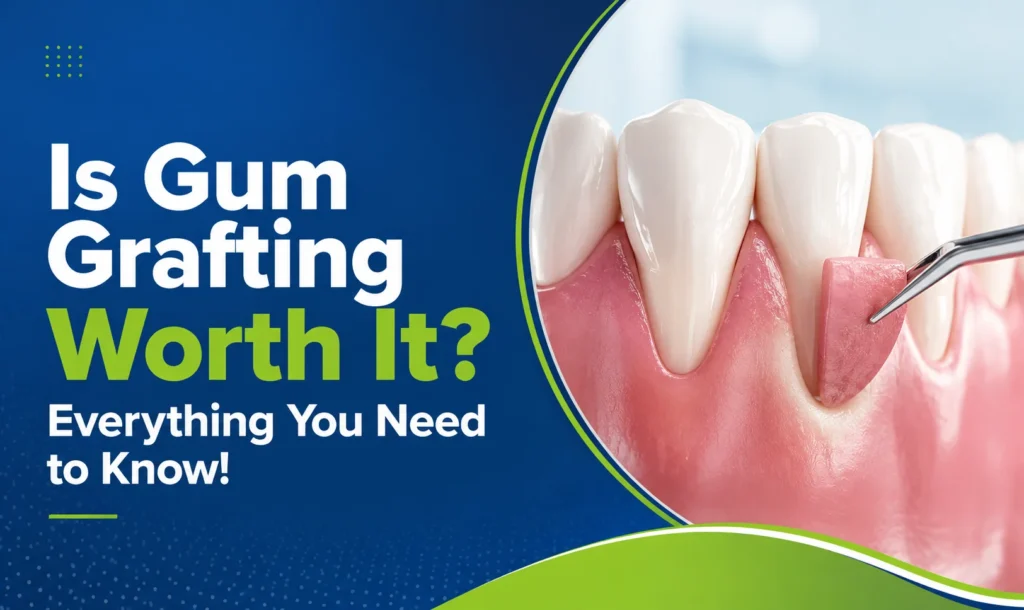
Gum grafting is a periodontal procedure — usually performed by a periodontist or a general dentist trained in it — that covers areas where your gum has receded and exposed the root of your tooth. The goal is simple: rebuild your gum line so your teeth are protected, sensitivity goes away, and your smile looks natural again.
There are three main types of gum grafts. Your dentist will pick the right one based on how much tissue you need and where.
1. Connective Tissue Graft (Most Common)
Tissue is taken from under the surface of your palate (roof of mouth) and placed over the receded area. This is the go-to technique for most cases.
2. Free Gingival Graft
A thin layer of tissue is taken directly from your palate. Best for patients with naturally thin gums who need thicker tissue.
3. Pedicle Graft
Uses tissue from healthy gum right next to the receding area —rotating it over the exposed root. Only an option when you have enough healthy gum next door.
At Moorestown Smile Center, we work with trusted periodontists in the Burlington County area for cases that need surgical grafting. For patients considering alternatives (like the Pinhole Surgical Technique), Dr. Khan can walk you through your options during a consultation.
Why Is Gum Grafting Necessary?
Gum recession is a principal factor linked to a set of oral problems. It can include:
- Teeth that become more sensitive to cold and hot foods than before
- More chances of cavity and root decay
- Weak structure of the tooth
- Inelegant teeth, like the teeth are longer.
- Risk of tooth loss due to severe gum recession
If no intervention is given to this complication, it can get worse, endanger your oral health, and dictate the need for highly invasive dental treatments in the future.
Am I a Candidate for Gum Grafting?
Gum grafting isn’t for everyone. Here are the signs that suggest you might benefit:
- Your gums have visibly receded — you can see more tooth than you used to
- Your teeth look “longer” than they used to
- You have sensitivity to cold, hot, or sweet foods along the gum line
- You can see or feel the root of a tooth
- Your dentist has noted “gum recession” in your chart
You may NOT be a good candidate if:
- You currently smoke (needs to stop 2 weeks before and after)
- You have uncontrolled diabetes or blood pressure
- You have active gum disease (needs to be treated first)
- You take certain blood thinners (needs medical clearance)
- Your recession is very mild — Dr. Khan may suggest monitoring
first
The only way to know for sure? A comprehensive exam. Dr. Khan can assess your gum health, measure recession depth, and recommend the right path forward.
Gum Graft Recovery Timeline — Day by Day
Day 1 (Surgery Day)
– Anesthesia wears off in 2-4 hours
– Take prescribed pain medication before pain starts
– Cold compress on cheek — 15 min on, 15 min off
– Eat only soft, cold foods (yogurt, applesauce, smoothies)
– Rest with head elevated
Days 2-3 (Peak Discomfort)
– Swelling is normal and typically peaks
– Continue pain medication as needed
– Salt water rinses can begin (gentle)
– Continue soft food diet
Days 4-7 (Turning the Corner)
– Swelling starts decreasing
– Pain becomes manageable without prescription meds
– Can add slightly warm foods (still soft)
– May return to non-strenuous work
Week 2 (Steady Healing)
– Most patients feel nearly normal
– Follow-up visit typically scheduled
– Can add more foods to diet (still nothing hard or crunchy)
– Cleared for light exercise
Weeks 3-4 (Nearly Healed)
– Graft has integrated with existing tissue
– Most food restrictions lifted
– Can return to normal exercise routine
– Gentle brushing at the graft site OK
Weeks 4-6 (Fully Healed)
– Full recovery
– Graft is fully integrated
– Normal oral hygiene routine resumes
– Long-term results become visible
Safe Foods to Eat During Recovery
Week 1 — Cold, Soft Foods Only:
– Plain yogurt or Greek yogurt
– Applesauce
– Smoothies (no seeds)
– Cottage cheese
– Ice cream (avoid nuts/chunks)
– Cold soups (like cucumber or gazpacho)
– Room-temperature mashed potatoes
– Scrambled eggs (cooled)
Week 2 — Slightly Warm Soft Foods:
– Warm oatmeal
– Well-cooked pasta
– Soft-cooked vegetables
– Baked fish
– Mashed avocado
– Smooth soups
AVOID for 4-6 Weeks:
– Crunchy foods (chips, nuts, popcorn, granola)
– Sticky foods (caramel, chewy candy)
– Hot temperature foods and drinks
– Spicy foods
– Acidic foods (citrus, tomatoes)
– Alcohol
– Straws (can dislodge blood clots)
– Small seeds (raspberries, sesame, poppy)
What Does Gum Grafting Cost?
The cost of gum grafting varies based on:
– How many teeth need treatment— one tooth vs several
– Type of graft — connective tissue vs free gingival vs pedicle
– Complexity — some cases require more time or grafts
– Whether you need a periodontist— specialists charge more
– Your location — costs vary by region
Typical cost ranges in New Jersey:
– One tooth: $600 – $1,200
– Multiple teeth (same surgery): $1,500 – $3,000+
– Consultation: $75 – $150 (often waived if you proceed)
Does insurance cover gum grafting?
Yes — most dental insurance plans cover gum grafting when it’s medically necessary (which it usually is when recession is causing sensitivity or risk of tooth loss). Coverage typically ranges from 50-80%.
Payment options at Moorestown Smile Center:
– Most major PPO insurance plans accepted
– CareCredit financing—0% interest options for qualifying patients
– Proceed Finance— for larger cases
Don’t let cost stop you from getting the treatment you need. Call (856) 638-5266 for a personalized estimate.
Conclusion: Is Gum Grafting Worth It?
Most people find gum grafting beneficial to manage gum recession and sensitivity issues and create a better smile. The gum transplant success rate remains high, and patients experience more benefits than risks during the procedure. Consult a dentist or periodontist before deciding if this treatment is right for you. The costs and recovery time for this procedure are worth it because of its many long-term benefits.
Are you considering gum graft surgery? Moorestown Smile Center provides gum treatments to make your teeth stronger and more attractive. Our professional staff will walk you through the whole process for a swift recovery. Make your appointment today and get started on your journey to improve your gum health!
FAQs
The surgery itself takes 45-90 minutes for a single site, longer for multiple sites. You’ll be numbed, so it feels quick.
Most patients can return to non-strenuous desk work in 2-3 days. Physical labor may require 5-7 days.
Yes — but avoid the graft site for at least 7-10 days. Brush your other teeth normally with a soft toothbrush. Rinse with prescribed mouthwash instead.
Yes — but that’s the goal! Gum grafting restores your NORMAL tooth length. Recession made your teeth look artificially long by exposing the root. Grafting covers that root back up.
No. Smoking dramatically increases the risk of graft failure. You should stop smoking at least 2 weeks before and after surgery.
With proper oral hygiene and no smoking, gum grafts typically last a lifetime. Regular dental cleanings help maintain results
How painful is gum grafting?
Gum grafting might induce low to moderate irritation. Patients usually manage this with common pain medications.
Pain relievers reduce the problematic symptoms, which disappear after several days.
Can gum grafting fail?
The healing process of the graft remains a rare but possible failure. The success of your treatment will be improved when you adhere to your dentist-prescribed care plan.
About the Author
 Dr. Aliya Khan, DDS is a Columbia University-trained dentist and
the founder of Moorestown Smile Center in Moorestown, NJ. With
20+ years of experience in cosmetic and family dentistry, she
has helped hundreds of patients achieve brighter, healthier
smiles. Voted Best Dental Practice in Burlington County in
2024 and 2025. Learn more →